
Tankless Water Heater Installation
- Home
- Services
Tankless Water Heater Installation Houston | Sized, Vented and Set Up Properly
A tankless water heater does not store hot water, it produces it on demand. That single difference changes the sizing maths, the gas supply, the venting and the maintenance schedule, which is why a tankless installation is a very different job from swapping one tank for another.
Tankless water heater installation in Houston carries one extra variable that most cities do not have to weigh as heavily: the incoming water is hard, and scale is the main thing that shortens a tankless unit. Your Home Plumber connects Houston homeowners with tankless installation that sizes the unit to real demand and sets the gas and venting up correctly from day one.
Sizing a Tankless Water Heater for a Houston Home
Almost every complaint about a tankless system traces back to sizing. A unit that cannot keep up was not undersized by accident, it was chosen on price or on the size of the old tank rather than on the two numbers that actually matter.
The first number is flow rate, measured in gallons per minute. Add up the fixtures likely to run at the same time on a bad morning: a shower, a kitchen tap, maybe the dishwasher. That total is the demand the unit has to satisfy simultaneously, not one after another.
The second is temperature rise, the gap between incoming groundwater temperature and the temperature you want at the tap. Houston groundwater is comparatively warm, which works in your favour and means a correctly chosen unit here can often deliver a higher usable flow rate than the same model installed further north. Sizing on those two figures together is what produces a tankless water heater that never runs cold mid-shower.
Have a plumbing problem ? We can help you!
What a Tankless Installation Actually Involves
Replacing a tank with a tankless unit is rarely a like-for-like swap. Three parts of the house usually need attention before the new heater can run at its rated output, and skipping any of them is what produces an underperforming system.
Gas Line and BTU Capacity
A tankless unit fires far harder than a tank while it runs. The existing gas line is often too small to feed it, so an upgraded line or a meter check is a routine part of the job rather than an upsell.
Dedicated Venting
Tankless heaters need their own sealed vent, usually stainless or PVC depending on whether the unit is condensing. An old atmospheric flue from a tank cannot simply be reused.
Condensate and Drainage
Condensing units produce acidic condensate that needs a drain and, in many cases, a neutraliser. Planning that route at installation avoids an awkward retrofit later.
Tankless vs Tank | Choosing for Your Household
Tankless is not automatically the right answer for every Houston home. The honest comparison depends on how much hot water the household draws at once, where the unit can be mounted, and how long you plan to stay in the property.
Endless Supply, Within Limits
A correctly sized tankless never runs out, but it does have a ceiling on simultaneous flow. Exceed it and every outlet cools rather than one stopping.
Space and Placement
A wall-mounted tankless unit frees the floor area a tank occupied, which matters in a utility room or a tight garage corner. Vent routing usually decides where it can go.
Running Cost and Efficiency
A tank reheats stored water whether anyone uses it or not. Tankless only fires on demand, so the saving is largest in households with uneven or modest hot water use.
Up-Front Complexity
Gas upgrades, new venting and condensate drainage all add work at installation. That trade-off makes most sense when you intend to stay in the property.
For All Your Plumbing Needs, We’ve Got You Covered!
Our Tankless Water Heater Installation Process
A tankless installation is mostly preparation. By the time the unit goes on the wall, the sizing, the gas capacity and the vent route have already been settled, which is what keeps the job to a predictable shape.
Demand and Flow Assessment
Fixtures are counted, peak simultaneous demand is worked out and temperature rise is calculated, so the unit is chosen on numbers rather than tank size.
Gas, Vent and Electrical Check
Existing gas line capacity, available vent routes and electrical supply are checked before any unit is ordered, so surprises surface on paper rather than on the day.
Mounting and Connection
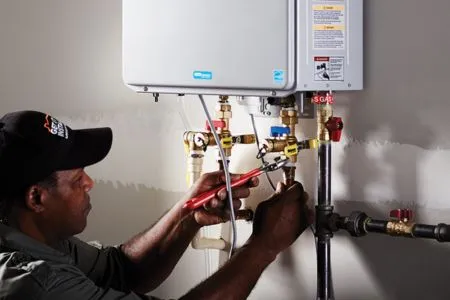
The heater is mounted, connected to gas, water and power, and fitted with isolation service valves so future descaling never needs pipework cut.
Commissioning and Handover
The unit is fired, flow and temperature checked at the fixtures, combustion and venting verified, and the descaling interval explained before anyone leaves.
Hard Water and Tankless Descaling in Houston
Houston water carries enough dissolved mineral to matter. Inside a tankless heat exchanger, that mineral bakes onto the walls of very narrow passages, and scale build-up shows up as reduced flow, fluctuating temperature and eventually error codes long before the unit actually fails.
A periodic flush with a descaling solution circulated through the isolation valves clears it. This is why the service valves fitted at installation matter so much: a unit installed without them cannot be descaled without cutting pipework. Where the household water is particularly hard, a softener or scale inhibitor ahead of the heater stretches the interval between flushes considerably.
Electric or Gas Tankless?
Gas tankless units carry the higher output and handle whole-house demand in most Houston properties, but they need a correctly sized gas supply and a dedicated vent. Electric units avoid the venting question entirely and mount almost anywhere, though a whole-house electric tankless draws heavily enough to need serious electrical capacity.
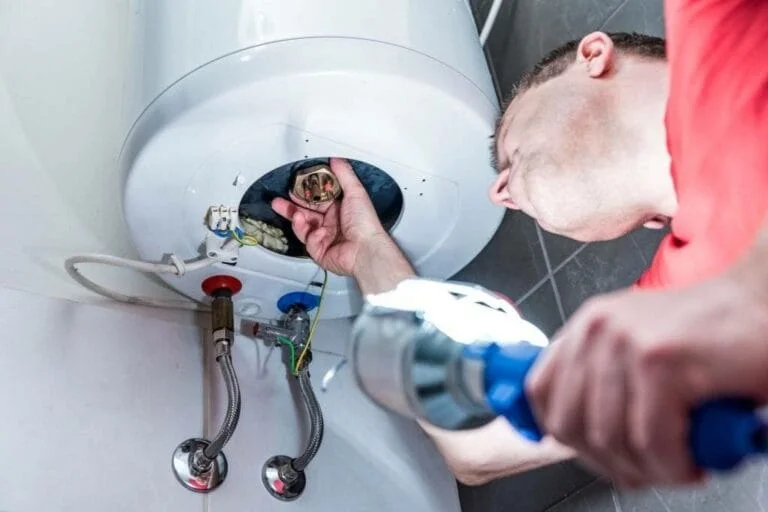
Electric comes into its own at point of use: a single unit under a distant bathroom sink, or serving a garage apartment or outdoor kitchen, removes the long wait for hot water to travel from the main heater without touching the rest of the system.
Consider a Recirculation Loop
A tankless unit heats water instantly, but the water already sitting in the pipe between the heater and the tap is still cold. In a larger Houston home that wait can run to a noticeable amount of wasted water every morning. A recirculation loop, either dedicated or using the cold line as a return, keeps hot water close to the fixtures. Many tankless models include the pump and controls to run one, and it is far cheaper to plan for at installation than to retrofit later.
A tankless water heater installation Houston homeowners stay happy with is decided at the sizing stage, long before anything is mounted on a wall. If a storage tank still suits the household better, our water heater service page covers that route, and gas capacity work is set out on our gas line page. For independent guidance on how demand-type heaters perform, see the US Department of Energy.
Frequently Asked Questions
A correctly sized gas unit generally will. The limit is simultaneous flow rather than total volume, so the sizing exercise counts the fixtures likely to run at the same moment rather than the number of bathrooms.
Very often, yes. Tankless heaters fire at a much higher input than a tank while running, and an existing line sized for a tank frequently cannot deliver it. That is checked before a unit is selected.
Local water is hard enough that an annual flush is a sensible baseline, and more frequently if you notice flow dropping or temperature swinging. Isolation valves fitted at installation make the job straightforward.
Sometimes, but not always. Venting requirements and clearances usually decide placement, and the wall-mounted format often opens up better positions than the tank occupied.
Gas suits whole-house demand in most Houston homes. Electric works well at point of use, such as a remote bathroom, garage apartment or outdoor kitchen, where running a vent would be impractical.