
Slab Leak Detection and Repair
- Home
- Services
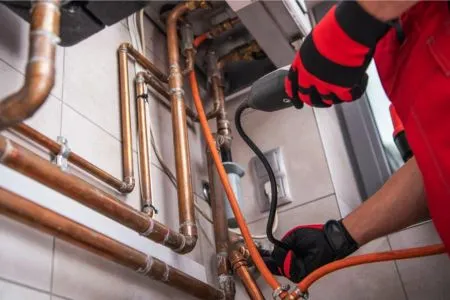
Slab Leak Repair Houston | Finding and Fixing Leaks Under the Foundation
Houston sits on some of the most active clay soil in the country, and almost every home here is built on a concrete slab. When a water line running through or beneath that slab fails, the first evidence is rarely a puddle. It is a water bill that jumped for no reason, or a patch of floor that is warm underfoot.
Slab leak repair in Houston starts with locating the leak precisely, because the price of being wrong is measured in concrete. Your Home Plumber connects homeowners with slab leak detection and repair that uses acoustic listening, pressure isolation and thermal imaging to pinpoint the break before anything is opened up.
Slab Leak Detection Houston | Pinpointing the Break Before Breaking Concrete
A slab leak can only be repaired accurately once it has been located accurately. Non-invasive slab leak detection in Houston narrows the fault to a small area, and that result decides whether the fix is a spot repair, a reroute or a full repipe.
Detection normally runs in layers. Pressure isolation comes first: the hot and cold sides are separated and tested so the leak is attributed to the right line before anyone starts listening for it. Acoustic equipment then picks up the sound of water escaping under the slab, and moving the sensor across the floor narrows the source to within a small radius.
Where the escaping water is hot, thermal imaging reads the temperature difference through the floor covering and confirms the acoustic result. On stubborn cold-water leaks, tracer gas can be introduced into the isolated line and detected as it rises through the slab. Layering the methods is what turns a rough guess into a mark on the floor.
Have a plumbing problem ? We can help you!
Why Slab Leaks Are So Common in Houston
A slab leak is not usually bad luck. Three local conditions act on the same pipework, and a house that has stood quietly for twenty years can start losing water after a single wet winter followed by a hard summer.
Expansive Clay Under the Slab
Gulf Coast clay swells after rain and shrinks in the heat. The slab moves with it, and any pipe cast into or running beneath that concrete is dragged along until a joint or a bend gives way.
Copper Pinhole Corrosion
Hard Houston water works on copper from the inside. Corrosion starts as a pinhole rather than a split, which is why a slab leak can run for months before anything shows above the floor.
Hot Water Line Stress
Hot lines expand and contract every time the water heater cycles. That constant movement against concrete abrades the pipe, and it is why hot water lines fail under slabs far more often than cold ones.
Signs of a Slab Leak in a Houston Home
Water escaping under a foundation has nowhere obvious to go, so the symptoms show up indirectly. Any one of the following on its own is worth checking. Two together usually means a slab leak.
A Water Bill That Jumped
A bill that rises sharply with no change in household use is the most reliable early sign. Water leaving a pressurised line under the slab is still metered on the way past.
Warm Spots on the Floor
A patch of tile or timber that feels warm underfoot, with no underfloor heating in the house, usually sits directly above a leaking hot water line.
The Sound of Running Water
A faint rush or hiss when every tap in the house is closed means water is still moving somewhere. Under a slab, that sound often carries best at night.
Cracks, Damp Carpet and Mildew
Escaping water softens the soil supporting the slab. New cracks in flooring or walls, carpet that stays damp in one spot, or a musty smell that will not clear all point downward.
For All Your Plumbing Needs, We’ve Got You Covered!
How a Slab Leak Repair Is Carried Out
Once the leak is located, the repair method depends on where the break sits, what the line feeds and how much pipe is likely to fail next. These four steps keep the decision based on evidence rather than assumption.
Isolate and Confirm
Hot and cold sides are separated and pressure-tested so the leak is attributed to the correct line before any locating work begins.
Locate and Mark
Acoustic listening and thermal imaging narrow the break to a small area, and the position is marked on the floor so the opening stays as small as possible.
Choose Spot Repair, Reroute or Tunnel
Pipe condition, slab type and access decide the method. A single clean break may justify a spot repair, while corroded copper usually points to a reroute.
Repair, Restore and Retest
The line is repaired or replaced, the opening made good, and the system pressure-tested again to confirm nothing else on the run is losing water.
Reroute or Repipe | When Opening the Slab Is Not the Answer
Breaking concrete is not always the right call. Where a line has already leaked once, or the copper shows corrosion along its length, cutting a new route through the walls and ceiling often makes more sense than reopening the floor for a second failure a year later.
A reroute abandons the failed section under the slab and runs replacement pipe above ground to the same fixtures. A full repipe does the same across the whole house. Both avoid tunnelling, both leave the foundation untouched, and both give you pipework you can actually reach if anything happens later.

Reducing the Risk of Another Slab Leak
Pressure is the factor most Houston homeowners can control. Municipal supply pressure that runs high pushes copper harder than it needs to be pushed, and a pressure-reducing valve set to a sensible range takes that stress off every joint in the house.
Water chemistry matters too. Hard water accelerates the pinhole corrosion that starts most copper slab leaks, and softening or conditioning the supply slows it down. Neither step reverses damage already done, but both extend the life of what is left under the floor.
Watch the Water Meter
The simplest slab leak test costs nothing. Turn off every fixture and appliance in the house, then look at the meter. If the low-flow indicator is still turning, water is going somewhere it should not. Repeating that check every few months catches a slab leak while it is still a plumbing job rather than a foundation and flooring job.
Slab leak repair Houston homes need is only as good as the locating work behind it, which is why detection comes first and concrete comes last. Where the same pipework has already failed more than once, our repiping page covers the alternative, and general supply-side faults are handled on our leak detection page. For a simple way to check household water loss, see the meter test described by EPA WaterSense.
Frequently Asked Questions
Shut off every fixture and appliance, then watch the water meter. If the low-flow indicator keeps moving, water is escaping somewhere in the system. That does not prove the leak is under the slab, but it does confirm there is one.
No. Where the failed section can be bypassed, a reroute runs new pipe through walls or the attic and leaves the slab untouched. Breaking concrete is normally reserved for a single, clearly located break on otherwise sound pipework.
Hot lines expand and contract every time the water heater runs. That repeated movement wears the pipe where it contacts concrete, so hot water lines fail under slabs noticeably more often than cold ones.
Water escaping under a slab softens and washes out the soil supporting it. Over time that can lead to uneven settlement, which is why slab leak repair in Houston is treated as urgent rather than something to monitor.
It depends on the pipework. A single mechanical break on sound copper is worth repairing. Copper showing pinhole corrosion in more than one place tends to keep failing, and a repipe deals with the cause rather than the latest symptom.